

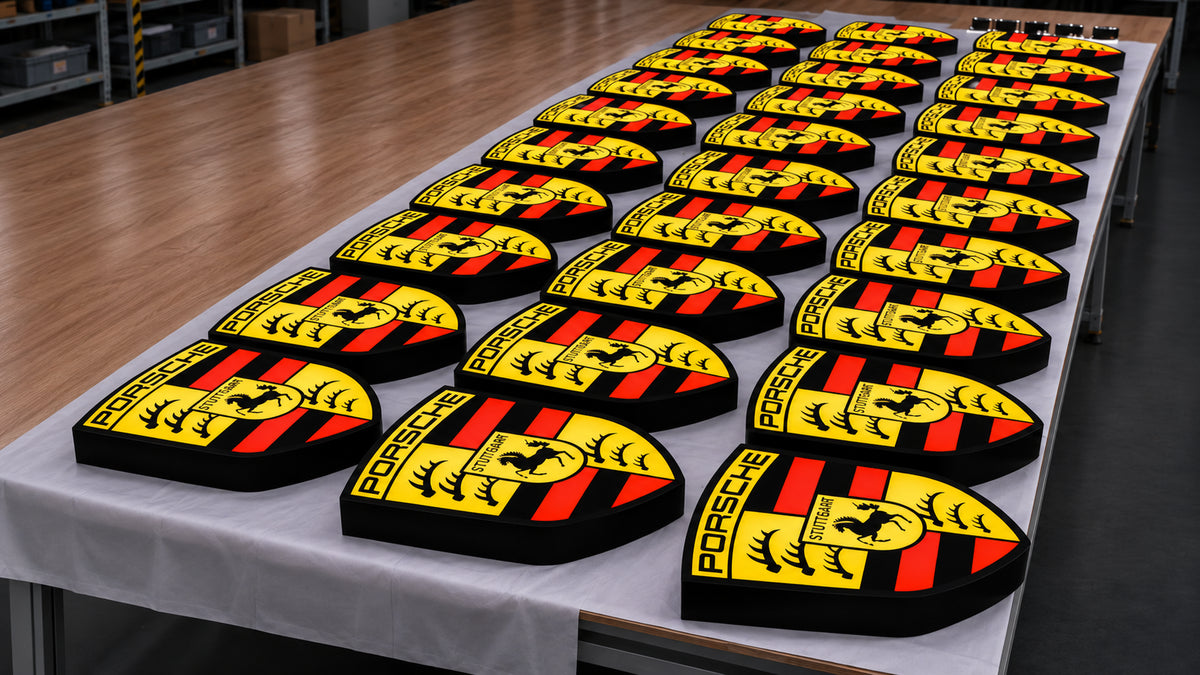
Ordering custom lightboxes in bulk requires more than agreeing on dimensions and unit prices. Buyers should confirm the product construction, illuminated appearance, artwork requirements, sample specifications, and quotation scope with the manufacturer. These details help prevent mismatched specifications, unexpected costs, and avoidable problems during production and delivery.
1. What Product Specifications Should You Confirm Before Ordering?
Before requesting a quotation, make sure the manufacturer understands exactly what you want to produce. A lightbox is a combination of a structural enclosure, display face, graphic treatment, lighting system, and mounting components. A difference in any of these elements can change the finished product and its manufacturing cost.
The following information should be confirmed for each product design.
| Specification | What to Confirm |
|---|---|
| Overall Dimensions | Width, height, depth, and custom shape |
| Viewing Configuration | Single-sided or double-sided |
| Construction | Framed, frameless, recessed, vacuum-formed, push-through, or other custom structures |
| Face Material | Acrylic, fabric, or other specified materials |
| Frame Material | Aluminum, steel, or other structural materials |
| Graphic Treatment | Printed graphics, translucent colors, cut-out details, or dimensional elements |
| Lighting Configuration | LED strips, LED modules, and illumination arrangement |
| Installation Method | Wall-mounted, projecting, suspended, recessed, or freestanding |
| Electrical Requirements | Input voltage, power connection, and wiring arrangement |
Not every project requires every construction option. The important point is to ensure that the proposed configuration matches the intended appearance and application.
If you have not finalized the product type, review the main lightbox configurations, materials, and applications and explore LC Sign's custom lightbox collection to understand the available configurations before confirming your specifications with the manufacturer.
2. What Artwork and Branding Details Should You Confirm?
For custom commercial lightboxes, artwork must be compatible with the physical face construction and illumination system. A graphic that looks correct on a computer screen may appear different once printed on a translucent surface and illuminated.
Before production, confirm the following with the manufacturer.
Artwork Files and Dimensions
Provide the approved logo and artwork in a suitable production format. Vector files such as AI, EPS, and editable PDF are generally preferred for accurate scaling and graphic reproduction.
Confirm that the manufacturer has the correct:
- Logo proportions and placement.
- Text, fonts, and graphic elements.
- Artwork dimensions and layout.
- Front-facing or double-sided graphic requirements.
For detailed typography and graphic considerations, see the LC Sign Typography & Design Guide.
Color Reproduction Under Illumination
Brand colors may look different when printed on translucent materials and illuminated from behind.
Ask the manufacturer how the specified colors will be reproduced, whether through translucent printing, colored materials, or another finishing method.
For important brand colors, confirm:
- Whether Pantone or another color reference will be used.
- Whether the colors need to be evaluated under illumination.
- Whether the face material affects the perceived color.
- Whether a physical color sample or illuminated proof is necessary.
Do not rely exclusively on an unlit digital artwork preview when color accuracy is important.
Final Artwork and Production Drawing Approval
Before manufacturing, request a final production drawing or artwork proof showing the approved dimensions, graphic placement, face construction, and relevant structural details.
For double-sided lightboxes, confirm the artwork orientation on both faces, particularly when the two sides display different information.
The approved drawing should become the reference for subsequent production. Any changes to the artwork, dimensions, or construction should be reviewed and approved before manufacturing proceeds.
3. Should You Request a Sample Before Bulk Production?
A sample is particularly useful when an order involves custom shapes, unfamiliar materials, distinctive face finishes, or specific illumination requirements.
It allows buyers to evaluate the actual construction and illuminated appearance rather than relying entirely on drawings and digital mockups.
What Should a Lightbox Sample Verify?
A representative sample should be inspected in both illuminated and unilluminated conditions.
| Inspection Area | What to Check |
|---|---|
| Overall Construction | Dimensions, depth, frame joints, and assembly |
| Face Appearance | Material finish, graphic clarity, and surface condition |
| Light Distribution | Brightness uniformity and visible hotspots |
| Color Appearance | Illuminated colors against the approved reference |
| Edge Details | Face alignment, joints, and perimeter finishing |
| Electrical Function | Lighting operation and power connection |
For lightboxes, illumination uniformity deserves particular attention. A product may look acceptable when switched off but reveal uneven brightness, visible LED points, or dark areas when illuminated.
Does the Sample Need to Match the Bulk Production Exactly?
Ideally, the approved sample should use the same critical materials, face construction, lighting configuration, and finishing methods as the intended bulk order.
However, the scope of sample production can vary according to the product.
A small sample may be sufficient to evaluate a face material or printed graphic, while a complete prototype may be necessary to verify a complex enclosure, double-sided construction, or integrated lighting system.
If the sample differs from the final production specification, document those differences clearly. Approval of one material or component should not automatically be treated as approval of the entire product.
4. What Should Be Included in a Custom Lightbox Quotation?
When comparing quotations from different manufacturers, make sure you are comparing the same product specifications and supply scope.
A lower unit price does not necessarily represent a lower total cost if the proposed construction, materials, lighting components, or included accessories are different.
The following items should be clearly stated in the quotation.
| Quotation Item | Details to Confirm |
|---|---|
| Product Specifications | Dimensions, depth, shape, and construction |
| Face Materials | Acrylic, fabric, thickness, finish, and graphic treatment |
| Frame Construction | Material, profile, surface finish, and structural details |
| Lighting System | LED configuration, specified components, and electrical requirements |
| Mounting Components | Brackets, plates, suspension hardware, and other accessories |
| Artwork and Customization | Printing, color matching, and special fabrication requirements |
| Quantity | Number of units for each specification |
| Packaging | Individual protection, cartons, or reinforced crates |
| Shipping | Shipping method, destination, and whether freight is included |
| Commercial Terms | Unit price, total amount, payment terms, and quotation validity |
Why Should You Compare the Complete Product Configuration?
Consider two quotations for lightboxes with identical external dimensions.
One manufacturer may quote a standard acrylic-faced enclosure with basic internal LED lighting. Another may quote a custom push-through structure with additional fabrication, different face materials, and a more complex lighting arrangement.
Although the dimensions are identical, the products are not equivalent.
The same applies to installation accessories and packaging. If one quotation includes mounting brackets and reinforced packaging while another excludes them, comparing only the unit prices can lead to an inaccurate purchasing decision.
Before approving a quotation, ask the manufacturer to clarify any unspecified components, optional items, or excluded services.
This is particularly important when sourcing multiple custom lightbox designs in one order.
5. What Packaging Requirements Should You Confirm for Custom Lightboxes?
Lightboxes may contain large acrylic faces, printed panels, metal frames, and electrical components. Their packaging requirements therefore depend on product dimensions, construction, and transportation conditions.
Before confirming the order, discuss the following details with the manufacturer.
Protection for Acrylic Faces and Finished Surfaces
Acrylic faces and printed surfaces can be vulnerable to scratches, pressure, and impact during handling and transportation.
Ask how the manufacturer will protect:
- Exposed acrylic faces.
- Printed or decorative surfaces.
- Finished metal frames.
- Corners, edges, and protruding components.
Protective films, cushioning materials, and suitable separation between products can help reduce the risk of surface damage.
Cartons, Reinforced Packaging, and Wooden Crates
The packaging method should reflect the actual dimensions, weight, and construction of the lightbox.
Smaller products may be suitable for individual cartons with internal cushioning. Larger or heavier products may require reinforced packaging or wooden crates, depending on their structure and transportation conditions.
For multiple lightbox designs in one order, confirm whether different product types require separate packaging arrangements.
Packing Identification and Shipping Information
For orders containing multiple specifications, confirm that the packing list and package labels clearly identify the corresponding product types and quantities.
Also clarify:
- The number of packages.
- Package dimensions and gross weight.
- Shipping destination.
- Transportation method.
- Any special handling requirements.
These details help buyers plan receiving arrangements and identify the correct products after delivery.
Conclusion
Ordering custom lightboxes in bulk requires clear communication about product construction, graphic requirements, sample specifications, quotation scope, and packaging.
Before confirming an order, make sure the manufacturer understands the intended appearance and application, that the approved sample represents the agreed production specifications, and that quotations cover comparable product configurations.
A clear, documented agreement before production helps reduce misunderstandings, avoid unexpected costs, and make custom lightbox orders easier to manage.
Planning a custom lightbox project? Contact LC Sign for custom quotes.

Frequently Asked Questions
Can I Request a Single Lightbox Sample Before Placing a Bulk Order?
A single-unit sample or prototype can be discussed with the manufacturer before bulk production. The appropriate sample scope depends on whether you need to evaluate the face material, graphic reproduction, lighting effect, or complete product construction. Confirm the sample specifications and approval requirements before proceeding.
Can Different Lightbox Sizes and Designs Be Included in One Order?
Yes. Different sizes, shapes, and configurations can be included in one custom order, subject to manufacturing feasibility. Each design should have its own approved specifications and production drawing to avoid confusion during manufacturing.
What Files Should I Send to Get a Custom Lightbox Quotation?
Provide a design drawing or reference image, overall dimensions, and the required lighting configuration. Vector artwork is preferred when available. You should also specify the face and frame materials, mounting method, quantity, and intended application. If some details are not finalized, discuss them with the manufacturer before requesting a final quotation.
Does LC Sign Provide Installation Drawings and Mounting Accessories?
LC Sign provides installation documentation, including 1:1 layout templates, wiring diagrams, and installation notes. Mounting accessories such as stud bolts, washers, and nuts can also be provided according to the product configuration. Buyers should confirm the required accessories and installation arrangements before production.
How Are Custom Lightboxes Protected During International Shipping?
Packaging depends on the product dimensions, face construction, weight, and shipping conditions. Acrylic faces and other vulnerable surfaces require suitable protection against scratches and impact. Larger or heavier products may need reinforced cartons or wooden crates. The packaging arrangement should be agreed upon with the manufacturer before shipment.
Recommended reading
Normal vs Push-Through Lightbox Signs: Which Face Construction Fits Your Project?
What Determines the Cost of a Custom Lightbox Sign?
How to Choose the Right Mini LED Letters for Your Signage Project
How to Choose the Right Metal Finish for Custom Signs
Recommended products
LC-XFL02 · LED Frontlit Rimless Letters & Signs