

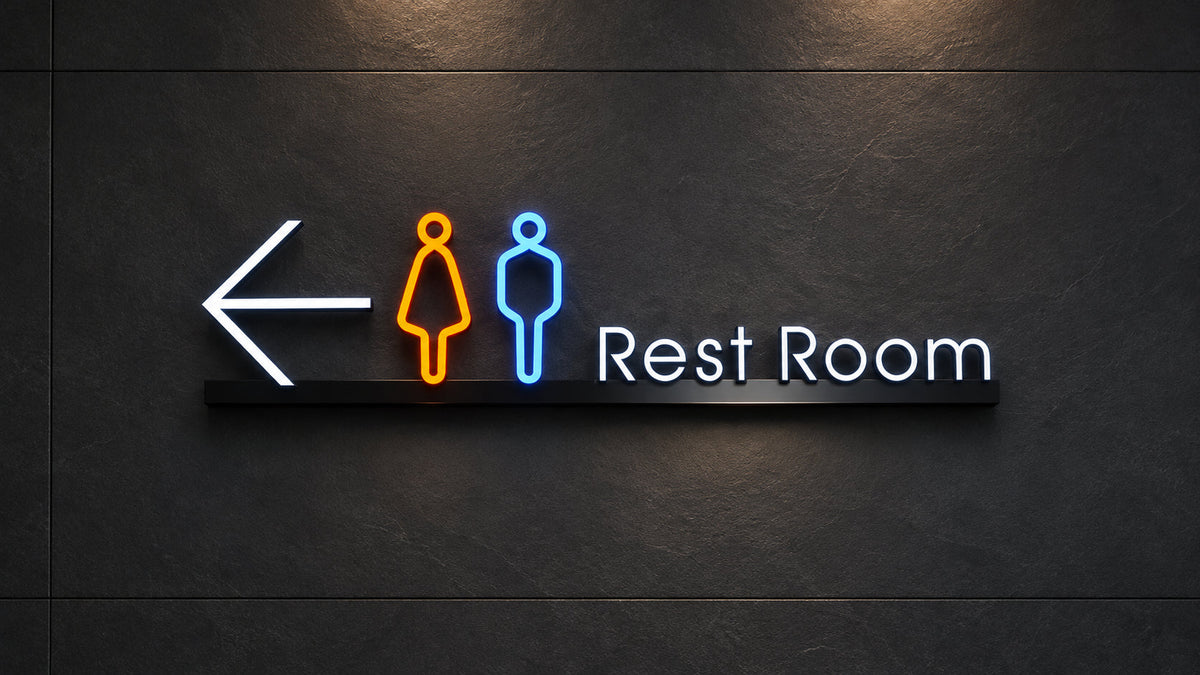
Mini LED letters are compact illuminated dimensional signs designed for branding applications where smaller lettering, detailed logos, and close-range visibility are important. Available in front-lit, side-lit, backlit, and combined lighting configurations, they offer different ways to present a brand in commercial interiors and selected exterior applications. Choosing the right option depends on the artwork, letter dimensions, desired lighting effect, installation environment, and construction requirements.
1. What Are Mini LED Letters and Where Are They Used?
Mini LED letters are smaller-format illuminated dimensional letters that integrate LED lighting into a compact structure. Unlike conventional large-format channel letters, they are generally intended for closer viewing distances and applications where detailed branding needs to fit within a more limited space.
Acrylic is an important material in this product category because it can form the illuminated faces and dimensional body of the letters, depending on the selected construction.
Mini LED letters are commonly used in the following applications.
Hotel and Hospitality Branding
Hotels use illuminated lettering for reception logos, lobby feature walls, concierge areas, and branded interior spaces.
The relatively close viewing distance makes surface details, edge quality, and lighting uniformity particularly noticeable.
Front-lit letters can provide direct brand visibility, while backlit configurations create a halo effect against the wall. The choice depends on the interior design and the visual emphasis required.
Retail Stores and Restaurants
Boutiques, retail stores, restaurants, and cafés use compact illuminated logos to reinforce brand identity around checkout counters, feature walls, display areas, and customer-facing spaces.
In these environments, the sign should complement the surrounding merchandise, furniture, and lighting rather than compete with them.
The overall dimensions, letter spacing, and lighting color should be considered together to maintain visual balance.
Corporate Offices and Showrooms
Mini LED letters can be used for company logos, reception branding, meeting areas, and showroom displays.
They are particularly relevant when a business wants dimensional illuminated lettering but has limited wall space or needs to reproduce a detailed logo at a relatively compact scale.
Clinics, Salons, and Professional Spaces
Clinics, beauty salons, studios, and professional offices may use mini illuminated letters for reception branding and interior identification.
The selected lighting effect can help establish a particular visual style, from direct illumination to softer reflected lighting.
Exhibition and Commercial Displays
Mini LED letters can also be incorporated into exhibition stands, branded display structures, and temporary commercial installations.
Their compact format allows illuminated logos to be integrated into different display layouts without requiring the space associated with larger building-mounted channel letters.
Can Mini LED Letters Be Used Outdoors?
Mini LED letters are not limited to indoor applications. However, exterior suitability depends on the specific product construction, sealing, electrical components, installation method, and environmental exposure.
LC Sign's mini LED letter products are waterproof and weatherproof, with additional protection measures available for conditions such as strong sunlight and heavy rain. The actual requirements should be reviewed against the installation location and local climate.
For outdoor projects, provide photographs of the installation site and information about the expected exposure before confirming the product configuration.
2. What Lighting Styles Can You Choose for Mini LED Letters?
Lighting direction is one of the most important decisions when choosing mini LED letters. Different configurations change which surfaces emit light and how the lettering interacts with its background.
The main options include:
| Lighting Style | How It Works | Visual Effect |
|---|---|---|
| Front-Lit | Light passes through the front face | Directly illuminated lettering |
| Side-Lit | Light is emitted through the letter sides | Illuminated dimensional edges |
| Back-Lit | Light is directed toward the mounting surface | Halo effect around the letters |
| Front & Back-Lit | Both front and rear surfaces are illuminated | Direct light combined with a halo |
| Front & Side-Lit | Front and side surfaces are illuminated | Combined face and edge illumination |
Front-Lit: When Direct Visibility Is Important
Front-lit letters emit light through their front faces, making the characters and logo directly visible.
This configuration is suitable when the illuminated face needs to remain the primary visual feature.
The face material, translucency, and color influence the final appearance. For logos with multiple colors, the face design should be evaluated alongside the lighting requirements.
Side-Lit: When the Letter Edges Should Stand Out
Side-lit letters use illuminated side surfaces to create a visible edge effect.
Rather than relying exclusively on a glowing front face, this configuration emphasizes the dimensional structure of each letter.
It can be considered for designs where the edges contribute significantly to the overall appearance.
The result depends on the letter construction and how light is distributed through the acrylic body.
Back-Lit: When a Halo Effect Is Preferred
Backlit letters direct light toward the mounting surface, producing a reflected halo around the characters.
The wall becomes part of the lighting effect. Its color, texture, distance from the letters, and surrounding illumination all influence the final result.
This style is frequently considered for hotel reception areas, corporate feature walls, and decorative interior branding.
A backlit sign should be evaluated in relation to the actual mounting surface rather than judged only from an isolated product photograph.
Combined Lighting: When More Than One Surface Should Illuminate
Some mini LED letter constructions combine front, side, or rear illumination.
For example, front-and-back-lit lettering combines direct illumination through the face with reflected light behind the characters.
Front-and-side-lit designs introduce an additional illuminated edge effect.
These configurations can create more complex visual presentations, but they also require the manufacturer to evaluate the available internal space, component placement, and light distribution.
To compare the available configurations and see how they are constructed, visit LC Sign's Acrylic LED Mini Letters product range.
Mini LED letters share several lighting principles with conventional channel letters, although their compact construction creates different design considerations. For a broader comparison of channel letter types, lighting styles, materials, and applications, see our dedicated guide.
3. What Should You Consider When Choosing Mini LED Letter Sizes and Designs?
The physical dimensions of mini LED letters affect more than their overall appearance. They also influence whether the selected design can accommodate the required materials, lighting components, and internal connections.
A logo that looks clear on a computer screen may require additional technical review when reproduced as a small illuminated structure.
Letter Height and Stroke Width
Letter height is only one part of the size decision.
Stroke width, internal openings, character spacing, and overall logo proportions also affect the finished result.
For example, a relatively large letter with very narrow strokes may present more construction challenges than a smaller letter with a simpler, heavier design.
This is particularly relevant to script fonts, decorative typography, and custom logos containing fine details.
The artwork should therefore be evaluated at the intended production dimensions, not only at its original digital size.
Logo Complexity and Internal Openings
Letters such as A, B, D, O, and R contain internal openings that need to be reproduced within the physical structure.
Custom logos may also contain narrow gaps, fine outlines, and closely spaced graphic elements.
As the design becomes smaller, these details may leave less space for the selected construction and lighting components.
Some features may need to be adjusted to achieve a practical result. However, changes to recognizable brand elements should always be reviewed and approved before production.
For a more detailed explanation, see how logo shapes, narrow strokes, and font details affect channel letter fabrication.
Internal Space and LED Placement
Mini LED letters have less internal space than larger dimensional lettering.
This makes the relationship between letter geometry, internal components, and illumination particularly important.
The selected lighting style determines where light needs to be directed. Front-lit, side-lit, and backlit configurations therefore have different construction requirements.
The manufacturer should review the actual artwork and proposed dimensions to determine whether the intended lighting arrangement can be accommodated.
Letter Depth and Edge Appearance
Letter depth influences the three-dimensional appearance and the available internal construction space.
A deeper letter may provide a different visual profile, but greater depth does not automatically produce better illumination.
The appropriate depth depends on the letter proportions, selected materials, lighting configuration, and intended viewing angle.
For compact interior branding, the relationship between letter depth and the surrounding wall is especially important.
Light Distribution and Visual Uniformity
An illuminated letter should be evaluated as a complete visual unit rather than simply checking whether its LEDs turn on.
The appearance of the face and edges depends on the relationship between the light source, material, internal space, and diffusion characteristics.
Potential issues include:
- Uneven brightness across the illuminated face.
- Visible bright spots or concentrated light sources.
- Dark areas around narrow strokes or corners.
- Inconsistent illumination between individual letters.
- Different visual effects across letters with varying shapes.
These issues should be reviewed during design validation and sample evaluation, particularly when a logo combines large characters with smaller graphic elements.
4. Are Mini LED Letters Suitable for Indoor and Outdoor Applications?
Mini LED letters can be used in different environments, but the requirements for indoor and outdoor installations are not identical.
The selected materials, construction, electrical components, and installation details should match the conditions in which the sign will operate.
Indoor Applications: Appearance and Viewing Conditions
Indoor installations generally allow more flexibility in choosing decorative lighting effects and surface appearances.
Important considerations include:
- Viewing distance and letter readability.
- Wall color and surface texture.
- Ambient lighting and reflections.
- Available mounting space.
- Access to wiring and power connections.
For example, a backlit logo on a dark textured wall may produce a different appearance from the same design mounted on a smooth, light-colored surface.
The lighting configuration should therefore be considered alongside the interior environment.
Outdoor Applications: Weather and Environmental Protection
Outdoor installations require additional attention to environmental exposure.
Relevant conditions include:
- Rain and humidity.
- Strong sunlight and ultraviolet exposure.
- Temperature changes.
- Dust and airborne contaminants.
- Installation height and accessibility.
The sign's sealing, electrical protection, materials, and mounting details should be evaluated as a complete system.
LC Sign indicates that its mini LED letter products can be used in outdoor conditions, with targeted protection measures considered for demanding climates. However, a product's general weatherproof description should not replace project-specific evaluation.
For installations in regions with heavy rainfall, strong sunlight, or significant temperature variations, provide the location and environmental conditions when requesting a quotation.
Mounting and Electrical Access
The installation method also affects the suitability of a particular configuration.
A sign mounted on a smooth interior wall may have different requirements from one installed on an exterior architectural surface.
Before production, confirm:
- The wall or mounting surface.
- Available installation clearance.
- Wiring exit positions.
- Power supply location.
- Access for future maintenance.
These details help the manufacturer evaluate the construction and prepare appropriate installation documentation.
5. What Information Do You Need to Get a Mini LED Letter Quote?
A complete quotation starts with a clear understanding of the intended sign.
LC Sign identifies three essential items for an initial quotation: the sign drawing or picture, the overall dimensions, and the preferred lighting effect.
Additional project information can help clarify the design and installation requirements.
| Information | What to Provide | Why It Matters |
|---|---|---|
| Logo Artwork | Vector file or clear sign image | Defines the shape and proportions |
| Overall Dimensions | Total width and height | Establishes the product size |
| Lighting Effect | Front-lit, side-lit, backlit, or combined | Determines the lighting configuration |
| Color Requirements | Face, body, and lighting colors | Defines the intended visual appearance |
| Installation Location | Wall or building photographs | Helps assess the mounting environment |
| Quantity | Number of signs or sets | Supports quotation and production planning |
| Project Requirements | Indoor or outdoor use, special conditions | Helps determine additional construction needs |
Artwork: Provide a Clear Logo File
Vector artwork is preferable because it preserves the original contours and proportions.
Common formats include AI, EPS, CDR, and DWG, provided that the files contain usable vector information.
Where possible, convert fonts and other design elements into curves or paths to avoid font substitution.
JPG and PNG images can be used as visual references, but they may not contain sufficient detail for an accurate production assessment.
Dimensions: Confirm the Overall Sign Size
Provide the intended overall width and height of the sign.
If the design includes a separate symbol and wordmark, indicate their individual dimensions and spacing where relevant.
For projects involving multiple signs, clarify whether all versions share the same dimensions.
The manufacturer can then review the artwork at the intended scale and identify any potential construction limitations.
Lighting Effect: Show the Intended Appearance
Specify whether you prefer front-lit, side-lit, backlit, or a combined lighting configuration.
If you are unsure which effect suits the design, provide reference photographs or examples.
The manufacturer can evaluate the proposed construction and discuss which configurations are suitable for the artwork.
Color: Identify Brand and Lighting Requirements
If the sign needs to match a corporate identity, provide a Pantone or other agreed color reference.
The face color, body color, and LED lighting color should be identified separately where applicable.
This helps avoid confusion between the color of the unlit material and the appearance of the illuminated sign.
Installation Photos: Show the Actual Environment
Photographs of the installation wall or building help the manufacturer understand the surrounding architecture, mounting surface, available space, and wiring conditions.
For outdoor projects, include information about the location's climate and exposure conditions.
Quantity and Project Details
Provide the number of signs required and indicate whether they are intended for one location or multiple sites.
For larger projects, it is also useful to identify any requirements for consistent dimensions, lighting appearance, mounting arrangements, or future repeat orders.
With these details, the manufacturer can assess the project more accurately and prepare a quotation based on the intended product rather than a general estimate.
Conclusion
Mini LED letters offer a compact way to bring illuminated branding into hotels, retail stores, restaurants, offices, showrooms, and other commercial environments.
The right choice depends on how the sign will be viewed, which lighting effect best supports the design, whether the artwork can be reproduced at the intended size, and what the installation environment requires.
Before requesting a quotation, prepare the logo artwork, dimensions, preferred lighting effect, and installation information. These details give the manufacturer a clearer basis for reviewing the design and recommending a suitable construction.
Planning a custom Mini LED Letter project? Send LC Sign your logo, intended dimensions, preferred lighting effect, and installation photos. Our team can review your requirements and help identify a suitable solution.
Frequently Asked Questions
What Is the Difference Between Mini LED Letters and Standard Channel Letters?
Mini LED letters use a smaller-format construction intended for closer viewing and compact branding applications, while standard channel letters are commonly used for larger storefronts and building façades. The main differences involve scale, internal construction space, and typical viewing conditions. Both can incorporate different lighting configurations depending on the product design.
What Lighting Style Is Best for Mini LED Letters?
There is no single best lighting style for every project. Front-lit letters provide direct illumination, side-lit designs emphasize the edges, and backlit letters create a halo effect against the mounting surface. The choice depends on the logo, surrounding environment, and desired appearance.
Can Custom Logos and Fonts Be Made into Mini LED Letters?
Many custom logos and fonts can be adapted into mini LED letters, but feasibility depends on letter dimensions, stroke width, internal openings, and the selected construction. Fine details and narrow strokes may require technical review or adjustments before production.
Can Mini LED Letters Be Used Outdoors?
Yes, LC Sign describes its mini LED letter products as waterproof and weatherproof, with additional protection measures available for demanding conditions. The appropriate construction should still be confirmed against the installation location, climate, sealing requirements, and electrical configuration.
What Do I Need to Provide for a Mini LED Letter Quote?
The three essential starting points are a drawing or picture of the sign, its intended dimensions, and the preferred lighting effect. Vector artwork, color references, installation photographs, quantity, and project conditions can help the manufacturer provide a more complete quotation.
Recommended reading
How to Choose the Right Metal Finish for Custom Signs
Copper, Brass, or Aluminum Which Is Best for Metal Relief Signs
Flat-Cut vs. Fabricated Metal Letters: Which Is Right for Your Sign?
Can Any Logo or Font Be Made into Channel Letters? Design & Fabrication Limits
Recommended products
LC-XFL02 · LED Frontlit Rimless Letters & Signs