

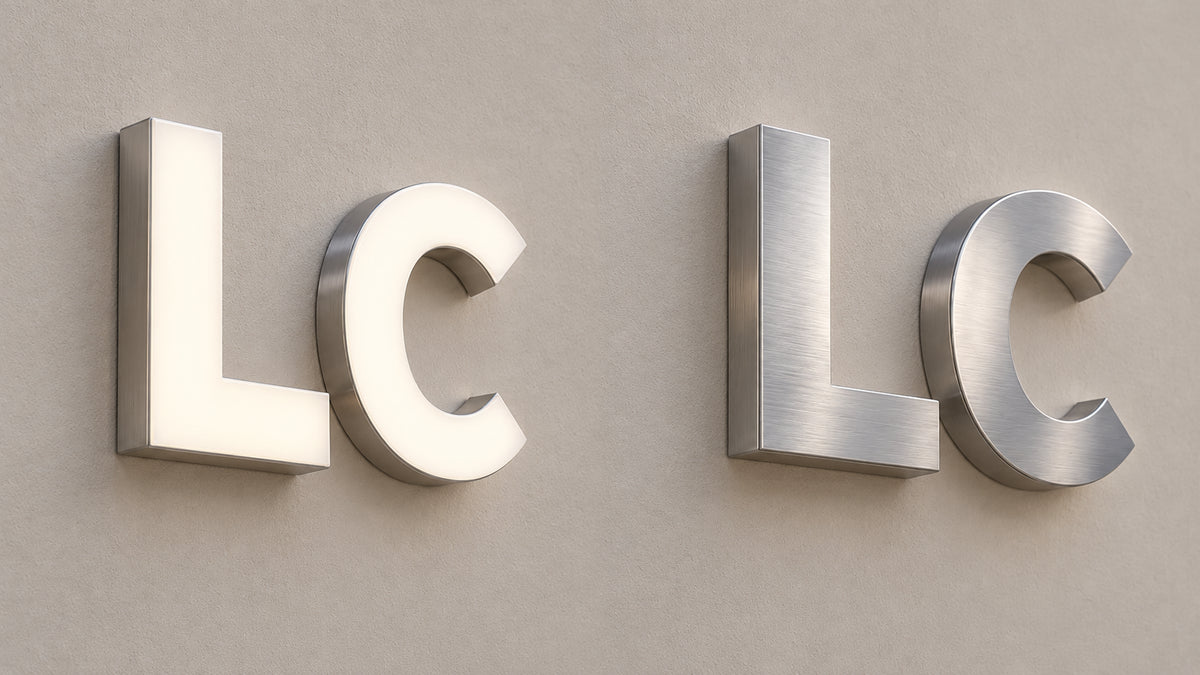
Choosing between acrylic and metal channel letters affects more than the material itself. It influences the sign's finished appearance, how light is presented, and which construction is suitable for the installation environment.
One important distinction: acrylic and metal are not always competing alternatives. Many channel letters combine an acrylic face with metal returns, while other designs use fabricated metal faces or more extensive acrylic construction.
The right choice depends on the visual effect you want, the lighting design, and the conditions in which the sign will be used.
Acrylic vs Metal Channel Letters: Key Differences
| Comparison | Acrylic | Metal |
|---|---|---|
| Finished appearance | Smooth surfaces, flexible color options, and translucent effects | Distinctive metallic textures, reflective finishes, or painted surfaces |
| Light transmission | Translucent grades can transmit and diffuse light | Generally opaque; illumination requires a suitable alternative light path |
| Design role | Well suited to illuminated faces and color-led visual effects | Well suited to architectural finishes, dimensional forms, and material-led designs |
| Environmental considerations | Consider UV exposure, temperature changes, scratching, and cleaning conditions | Consider metal type, coating, moisture exposure, and corrosion protection |
These differences describe the materials themselves. The final appearance and performance also depend on the complete letter construction and lighting design.
How Material Choice Changes the Finished Look
Acrylic and metal create different visual effects, particularly when their surfaces are prominent in the finished sign.
Acrylic offers flexibility in color and translucency. Depending on the selected grade and finish, it can produce a clean, uniform face, a translucent color effect, or a more opaque appearance. It is particularly useful when the face itself is an important part of the sign's visual identity.
Metal emphasizes surface character and dimensional form. Brushed stainless steel introduces a directional texture, polished metal creates stronger reflections, and painted metal can coordinate with a specific brand color or architectural finish. For a closer comparison of the available options, see our guide to choosing the right metal finish for custom signs.
Neither material is inherently more premium. The result depends on the finish, fabrication quality, proportions, and surrounding architecture.
For projects that combine illuminated faces with defined metallic edges, an acrylic face with aluminum or stainless-steel returns may offer a suitable balance between light transmission and material character.
How Material Affects Illumination
Material selection influences how light appears, but the final illumination effect depends on both the material and the lighting configuration.
Translucent acrylic is commonly used for front-lit channel letters because it allows light from internal LEDs to pass through the face. Its color, optical properties, thickness, and diffusion characteristics all influence the finished effect. For white illuminated faces, LED color temperature can further change the perceived appearance of the acrylic. See How LED Color Temperature Changes the Look of Channel Letters.
An opaque metal face does not transmit light in the same way. However, metal channel letters can still be illuminated through other design approaches, including halo lighting, side lighting, or purpose-designed acrylic inserts.
The important distinction is between the material's light-transmission properties and the sign's overall lighting design. Choosing acrylic does not automatically guarantee uniform illumination, just as choosing metal does not mean the sign must be non-illuminated.
For an overview of lighting configurations, see our Channel Letters: Types, Lighting Styles, Materials & Applications guide. For a closer comparison of direct face illumination and reflected halo illumination, see Front-Lit vs Backlit Channel Letters: Which One Fits Your Project?
How Does the Installation Environment Affect Material Choice?
The intended environment should influence material specification from the beginning, particularly for outdoor signs.
For acrylic faces, consider sunlight exposure, temperature changes, impact risk, surface scratching, and the cleaning products used. The appropriate acrylic grade, thickness, and finish depend on the application.
For metal components, consider the metal type, coating or surface treatment, moisture exposure, and the potential for corrosion. A polished finish, for example, may require different appearance-maintenance considerations from a painted surface.
For either material, the specification should reflect the actual installation conditions rather than a general assumption that one material is always more durable.
Indoor and outdoor applications can require different material combinations. The appropriate choice depends on the environment, expected use, fabrication details, and maintenance requirements.
Which Material Is Right for Your Project?
Use the intended finished effect as your starting point.
- Prioritize illuminated faces and color flexibility: Acrylic is worth considering when light transmission, translucent colors, or a smooth illuminated face are central to the design.
- Prioritize metallic character and surface finish: Metal is worth considering when brushed textures, polished surfaces, or a defined architectural finish are important.
- Need both effects? A combination of acrylic faces and metal returns may provide the desired illuminated appearance while retaining a distinct metallic edge.
These are starting points, not universal rules. The final decision should account for the sign's dimensions, lighting requirements, installation environment, and overall design.
Before Specifying Your Channel Letters
Before placing an order, confirm the face material, body or return material, surface finish, lighting configuration, and installation environment with your sign supplier. Providing the artwork, approximate dimensions, preferred visual effect, and installation-site information will help determine a suitable construction.
Explore LC Sign's custom sign range to review available sign options and discuss a configuration suited to your project.
Conclusion
Acrylic and metal offer different visual and functional possibilities. Acrylic is often suited to designs that depend on light transmission and color flexibility, while metal offers distinctive surface finishes and architectural character. Combining the two can achieve both.
Start with the appearance you want to achieve, then select the material combination and construction that meet your lighting and installation requirements.
Recommended reading
Raceway vs Individual Mount Channel Letters: Which Installation Method Fits Your Project?
How to Choose Channel Letters for a Storefront: 5 Key Decisions
How to Choose the Right Mini LED Letters for Your Signage Project
How to Choose the Right Metal Finish for Custom Signs
Recommended products
LC-XFL02 · LED Frontlit Rimless Letters & Signs